
How Art Creates Peace and Harmony in a Busy World

Peace and Harmony Art and the Calm of Painting
Discover how Peace and Harmony by Haydn Englander Porter reflects the calming power of art and its ability to quiet the mind in modern life.
How Art Creates Peace and Harmony in a Busy World
Life rarely slows down anymore. Across Australia and much of the world, people wake up to notifications, endless news cycles, crowded schedules, and constant mental noise. Even moments designed for rest are often interrupted by screens, emails, or the pressure to stay connected. For many people, true silence has become unfamiliar.
In times like these, art offers something increasingly rare, stillness.
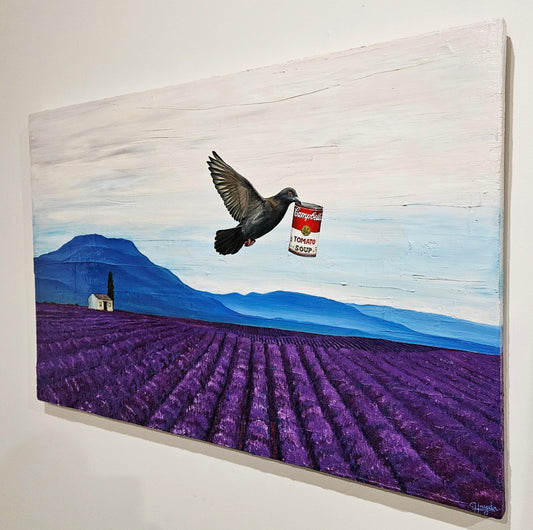
That feeling sits at the heart of Peace and Harmony, a monumental oil painting by Sunshine Coast contemporary artist Haydn Englander-Porter. The work is not political, nor is it focused on any one global issue. Instead, it explores the emotional need for calm, reflection, and balance in a fast-moving modern world.
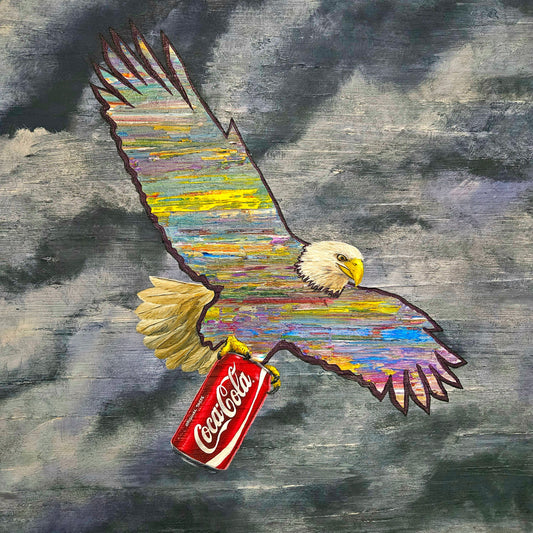
The painting depicts a soaring eagle flying across a vast, atmospheric sky while carrying one of the world’s most recognisable cultural symbols, the Coca-Cola can. Strength and elegance coexist within the composition. The image feels powerful yet strangely peaceful.
What makes Peace and Harmony particularly compelling is the emotional pause it creates. Standing before the work encourages people to step away from reality for a moment and reconnect with something quieter within themselves.
That has always been one of art’s greatest powers.
Art Allows the Mind to Slow Down
The human mind was never designed to process endless stimulation every waking hour. Yet modern life often demands exactly that. Phones vibrate constantly, conversations overlap, traffic fills the background, and social media creates a relentless stream of information that never fully stops.
Over time, this level of stimulation can leave people mentally exhausted.
Art works differently from most modern experiences because it asks for attention without demanding urgency. A painting does not interrupt. It does not shout. It simply exists, waiting for the viewer to slow down enough to engage with it.
This is one reason galleries and artistic spaces often feel calming. The environment encourages observation rather than reaction. People move more slowly. They breathe differently. Even silence begins to feel comfortable again.
Peace and Harmony captures that sensation beautifully. The open sky within the painting creates space, both visually and emotionally. The eagle glides without chaos or aggression. The atmosphere feels expansive rather than crowded.
For a few moments, viewers are removed from deadlines, routines, and outside pressure. Their focus narrows to colour, texture, movement, and symbolism. The mind naturally becomes quieter.
That temporary escape matters more than many people realise.
Why Escaping Reality Through Art Is Healthy
Escaping reality does not always mean avoidance. Sometimes it simply means giving the mind an opportunity to rest.
People often find this through music, literature, nature, or film. Art offers a particularly unique form of emotional escape because it leaves room for personal interpretation. A painting does not tell viewers exactly how to feel. Instead, it creates atmosphere and allows emotion to emerge naturally.
That freedom is deeply calming.
Unlike modern media, which constantly pushes opinions and information toward audiences, visual art allows people to arrive at their own emotional response. Some viewers may see hope in Peace and Harmony. Others may feel nostalgia, freedom, or emotional release. Many will simply feel calm.
The experience becomes personal.
This is especially important in a world where people are often overloaded with external voices and expectations. Art offers a rare opportunity to disconnect from noise and reconnect with oneself.
For a short while, reality softens.
The Relationship Between Art and Emotional Well-being
There is growing global interest in the relationship between creativity and mental well-being. Across Australia, galleries, hospitals, wellness spaces, and community programs increasingly recognise the emotional value of artistic environments.
Art encourages mindfulness naturally. When people study a painting, they become present. Their focus shifts away from stress and toward observation. Colours, movement, texture, and symbolism replace mental clutter.
This is one reason large-scale paintings can feel particularly immersive.
At 212cm wide and 150cm high, Peace and Harmony surround the viewer visually. The scale creates emotional presence. Rather than simply looking at the artwork, people feel absorbed into its atmosphere.
That immersion allows the outside world to fade temporarily. The pressures of everyday life become less dominant, even if only for a few minutes.
In many ways, art creates a quiet conversation between the viewer and themselves.
The Calming Symbolism Within Peace and Harmony
Every element within Peace and Harmony contributes to its emotional tone.
The eagle symbolises freedom, vision, and movement. It appears calm and controlled despite its immense strength. The sky surrounding it feels open and almost endless, creating a sense of emotional release rather than confinement.
Then there is the Coca-Cola can, an object tied deeply to collective memory and shared cultural identity. Rather than feeling commercial or harsh, it takes on a strangely nostalgic quality within the painting. It reminds viewers of simpler emotional ideas, optimism, togetherness, familiarity, and human connection.
Together, these symbols create emotional balance.
The painting does not feel aggressive or confrontational. Instead, it encourages reflection. There is movement, but not chaos. Power, but not anger. Ambition, yet also serenity.
That balance is likely why the work feels calming despite its scale and bold imagery.
Contemporary Art as a Form of Meditation
Meditation is often associated with silence and stillness, but creative observation can create similar emotional effects. Looking deeply at a painting encourages concentration, presence, and emotional awareness.
People often lose track of time when engaging with meaningful artwork because the mind temporarily shifts away from routine thinking. Stress softens. External pressure fades into the background.
This is part of what makes original paintings so powerful compared to digital imagery viewed quickly online. Physical artworks demand presence. Their texture, scale, and atmosphere cannot be fully experienced through a screen.
Haydn Englander Porter’s work frequently explores emotional atmosphere through bold composition and layered symbolism. His paintings often feel cinematic while remaining deeply personal and reflective.
In Peace and Harmony, this approach reaches a particularly emotional level. The work creates space for contemplation without forcing interpretation.
That openness allows viewers to mentally wander and emotionally breathe.
The Importance of Beauty in Difficult Times
Throughout history, people have turned toward beauty during periods of uncertainty. Art, music, literature, and architecture have always helped societies process emotion and maintain hope during difficult periods.
Beauty matters because it reminds people that life is not entirely defined by pressure or conflict.
In modern life, where much public conversation revolves around crisis, competition, and constant productivity, moments of beauty become increasingly important. They reconnect people with imagination, wonder, and emotional balance.
Peace and Harmony reflect this idea strongly. The painting does not attempt to lecture or provoke outrage. Instead, it creates visual beauty through scale, atmosphere, and symbolism.
That beauty becomes emotionally restorative.
For many viewers, standing before a powerful artwork offers a temporary reset. Their breathing slows. Their thoughts become quieter. The world outside loses intensity for a little while.
Sometimes that brief moment of calm is enough to change the course of an entire day.
Why Original Art Feels Different
There is a significant emotional difference between scrolling past images online and standing before an original painting.
Original artworks carry physical presence. Brushstrokes reveal movement and energy. Texture catches changing light throughout the day. Scale affects emotional perception. The painting becomes an experience rather than simply an image.
This is especially true with large-scale contemporary works like Peace and Harmony.
The sheer size of the painting creates a sense of immersion. The viewer feels physically connected to the composition. It becomes easier to mentally step away from ordinary surroundings and into the emotional world the artist creates.
That experience is increasingly valuable in modern interiors and living spaces. People are no longer choosing artwork purely for decoration. They are seeking an emotional atmosphere.
Calming art changes the feeling of a room. It influences mood, energy, and emotional comfort.
Returning to the Original Purpose of Art
Long before social media or digital entertainment existed, art served as a way for humans to process life emotionally. Paintings captured dreams, fears, beliefs, beauty, memory, and imagination. They allowed people to pause and reflect on something beyond survival or routine.
In many ways, Peace and Harmony reconnect with that original purpose.
The painting encourages viewers to step away from noise and remember what quiet reflection feels like. It reminds people that peace does not always arrive through dramatic change. Sometimes it begins with small moments of stillness and emotional clarity.
Art creates those moments.
For a little while, reality softens. Stress loses its grip. The mind slows down enough to breathe differently.
That is why paintings continue to matter so deeply, even in an age dominated by technology and speed.
Perhaps now more than ever.
To explore more works by Haydn Englander-Porter, visit Englander-Porter Art.
Tags:
Previous
Peace and Harmony: How Art Can Quiet the Noise of Modern Life
Next
Lavender Fields, The Emotional Calm of Landscape Art
Related Articles
The Flight by Haydn England...
Aug 25 2026
Butterflies 3 by Haydn Engl...
Aug 11 2026

Haydn Englander-Porter | Au...
Aug 04 2026
Coca-Cola Eagle, Freedom, C...
Jun 29 2026
New York City Butterflies: ...
Jun 19 2026

Why Watching an Artist Pain...
Jun 08 2026
Lavender Fields, The Emotio...
May 25 2026